
Hotel Operational Audit: Why Regular Performance Reviews Are Essential for Hospitality Businesses
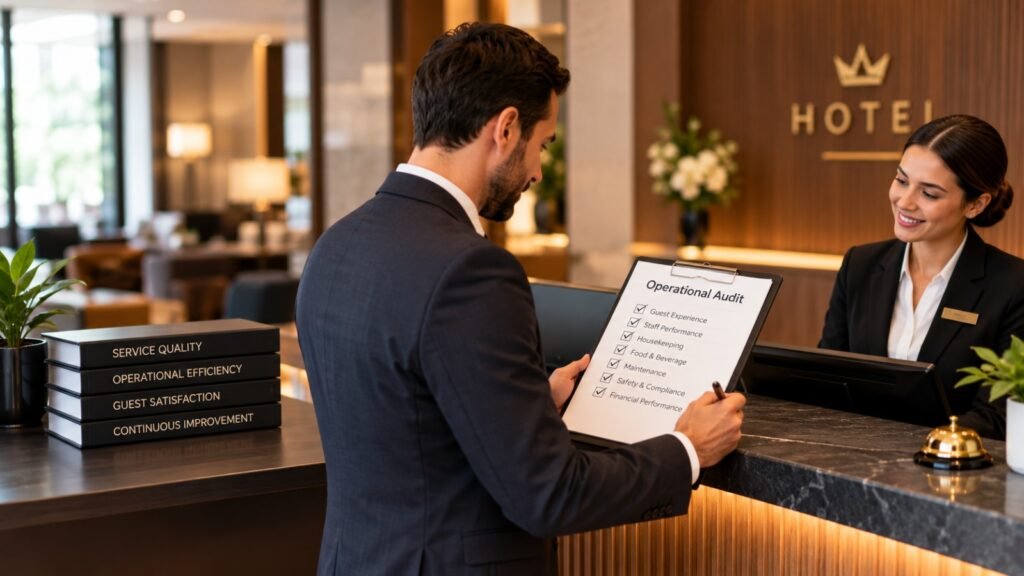
Home About us Services Hotel Consulting Restaurant Consulting Pre-opening Consulting Operational Audit SOP Development Revenue Optimization Leadership Training Digital Transformation Review Management Industry Hotels Restaurant Resorts Lounges & Clubs Retail Insights Contact Us X Hotel Operational Audit: Why Regular Performance Reviews Are Essential for Hospitality Businesses A hotel can appear successful on the surface while still losing revenue through inefficient processes, unnecessary costs, inconsistent service, or underperforming departments. Without regular performance reviews, these problems can remain hidden. A hotel operational audit provides a structured assessment of how effectively a property is operating and where improvements can be made. What Is a Hotel Operational Audit? An operational audit examines the systems, processes, people, and performance of a hotel. The objective is to identify operational strengths, weaknesses, inefficiencies, risks, and opportunities for improvement. Unlike a financial audit that primarily focuses on financial records, an operational audit looks at how the business actually functions on a day-to-day basis. Key Areas Covered by an Operational Audit A comprehensive hotel operational audit can examine multiple departments and business functions. Front Office The front office is one of the most important guest touchpoints. An audit may examine reservation handling, check-in and check-out procedures, guest communication, upselling, complaint handling, and service consistency. Housekeeping Housekeeping directly affects room quality and guest satisfaction. An operational review can examine cleaning procedures, productivity, room inspection processes, linen management, amenities, and coordination with the front office. Food and Beverage Food and beverage operations can have a significant impact on hotel profitability. Audits may review purchasing, inventory, food preparation, wastage, portion control, menu pricing, service standards, and outlet performance. Cost Management Unnecessary expenses can significantly reduce profitability. An operational audit can identify areas where resources are being used inefficiently. The objective is to improve cost efficiency while maintaining service quality. Human Resources and Leadership Employee performance and leadership effectiveness are critical to hospitality operations. An audit can identify staffing gaps, training requirements, unclear responsibilities, communication problems, and areas where management processes can be strengthened. Guest Experience Assessment Guest experience should be evaluated across the entire customer journey. An audit can examine booking, arrival, check-in, accommodation, dining, service requests, complaint handling, check-out, and post-stay engagement. Guest feedback and online reviews can provide additional insights into recurring service issues. Technology and Systems Hotels increasingly depend on digital systems for reservations, operations, revenue management, customer information, communication, and reporting. An operational audit can assess whether existing technology is being used effectively and whether systems support the hotel’s business objectives. Technology gaps can sometimes create unnecessary manual work, delays, or reporting challenges. Developing an Improvement Plan An audit is valuable only when its findings lead to action. After identifying gaps, management should prioritize recommendations based on business impact, urgency, cost, and implementation difficulty. A practical action plan can assign responsibilities, establish timelines, and define measurable outcomes. Benefits of Regular Operational Audits Regular operational audits can help hospitality businesses: Turning Audit Findings into Growth The ultimate purpose of an operational audit is not to criticize existing processes. It is to create a clearer understanding of how the business can perform better. When audit findings are converted into practical initiatives, hotels can improve operational efficiency while creating a stronger foundation for revenue growth and guest satisfaction. Conclusion A hotel operational audit is a valuable management tool for properties that want to improve performance systematically. By reviewing operations, people, costs, technology, service standards, and guest experience, hotel owners and operators can identify opportunities that may otherwise remain hidden. Regular performance reviews combined with effective implementation can help hospitality businesses become more efficient, consistent, and prepared for sustainable growth.s, and changing market conditions can all influence profitability. A restaurant consultant provides an objective assessment of the business and helps management understand where improvements can create the greatest impact. Improving Restaurant Operations Operational efficiency directly affects both customer satisfaction and profitability. Consultants can review areas such as kitchen workflow, service procedures, table management, inventory control, purchasing, staffing, and communication between front-of-house and back-of-house teams. Small operational improvements can make a significant difference when they are consistently implemented. Controlling Food and Operating Costs Food cost is one of the major financial considerations for restaurants. Poor inventory management, overproduction, wastage, inconsistent portion sizes, and inefficient purchasing can reduce margins. Restaurant consulting can help businesses establish better controls around purchasing, storage, inventory, portioning, menu engineering, and wastage management. The objective is not simply to reduce expenses but to create a more efficient operation without compromising food quality or guest satisfaction. Menu Engineering A restaurant menu should support both the customer experience and business profitability. Menu engineering involves evaluating items based on factors such as popularity, contribution margin, pricing, and customer demand. By understanding which dishes perform well and which products require improvement, restaurants can make more informed decisions about menu design, pricing, promotions, and product positioning. Enhancing Customer Experience Guests remember more than just the food. Service speed, staff behavior, cleanliness, atmosphere, communication, and problem resolution all influence the overall dining experience. Consultants can evaluate the customer journey and identify service gaps. Training teams around hospitality standards can help create more consistent experiences and improve customer satisfaction. Building Effective SOPs Standard Operating Procedures provide employees with clear guidelines for performing routine tasks. Restaurants can benefit from SOPs covering opening and closing procedures, food preparation, hygiene, customer service, complaint handling, inventory, cash management, and emergency processes. Well-designed SOPs reduce dependency on individual employees and create greater consistency across shifts. Managing Online Reputation Online reviews can strongly influence restaurant decisions. Customers frequently evaluate restaurants through review platforms and social media before choosing where to dine. Restaurant operators should monitor feedback, identify recurring complaints, respond professionally, and use customer insights to improve operations. Review management is therefore not simply a marketing activity—it can become an important operational feedback mechanism. Strengthening Restaurant Teams A successful restaurant depends on teamwork. Employees need clear responsibilities, effective communication, appropriate training, and strong leadership. Consultants can help restaurant management develop training frameworks and improve team accountability. When employees understand both their responsibilities
Hotel Pre-Opening Consulting: A Complete Guide to Launching a Successful Property
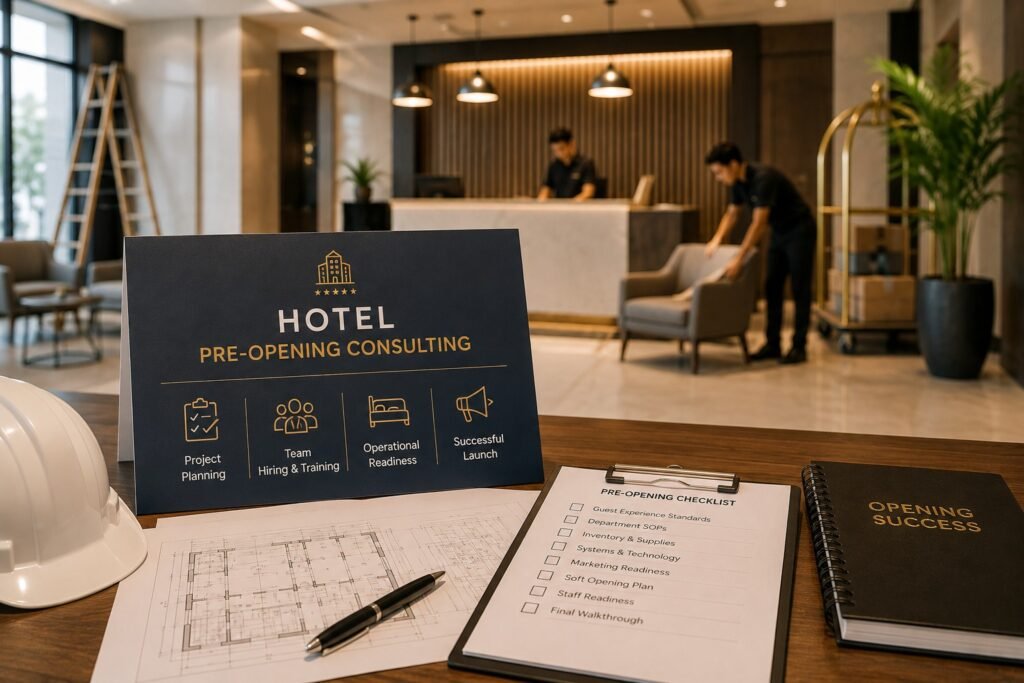
Home About us Services Hotel Consulting Restaurant Consulting Pre-opening Consulting Operational Audit SOP Development Revenue Optimization Leadership Training Digital Transformation Review Management Industry Hotels Restaurant Resorts Lounges & Clubs Retail Insights Contact Us X Hotel Pre-Opening Consulting: A Complete Guide to Launching a Successful Property Opening a hotel is a complex process involving hundreds of decisions before the first guest walks through the door. From operational planning and staffing to technology, service standards, revenue strategy, and guest experience, every detail can influence the success of a new property. This is why hotel pre-opening consulting plays an important role in preparing a property for a successful launch. What Is Hotel Pre-Opening Consulting? Hotel pre-opening consulting is a specialized advisory service designed to help owners and operators prepare a new hotel before opening. The objective is to ensure that the property has the right people, processes, systems, standards, and commercial strategy in place from day one. Instead of waiting for operational problems to appear after opening, pre-opening consultants help identify and address potential challenges in advance. Developing the Opening Strategy Every hotel requires a clear opening strategy. Consultants can work with owners and management teams to establish priorities, timelines, responsibilities, and performance objectives. A structured opening plan can cover areas such as: Having these elements organized before opening reduces confusion and improves coordination between departments. Building the Right Team Employees are one of the most important assets of a hotel. Recruiting the right people at the right time is essential for a successful launch. Pre-opening consulting can support organizational planning by defining departmental structures, job responsibilities, staffing requirements, and recruitment priorities. Once employees are hired, training should begin well before opening. Team members need to understand service standards, operating procedures, technology systems, safety requirements, and the hotel’s brand promise. Creating Standard Operating Procedures SOPs provide employees with clear instructions for performing important tasks consistently. From check-in and check-out procedures to housekeeping, food and beverage service, complaint handling, maintenance, and emergency procedures, well-designed SOPs establish operational consistency. Pre-opening consultants can help develop SOPs based on the hotel’s positioning, service concept, operating model, and target guests. Preparing Technology and Systems A modern hotel depends on technology to manage reservations, rooms, payments, guest information, housekeeping, revenue, communication, and reporting. Before opening, technology systems should be selected, configured, tested, and integrated wherever necessary. Employees should also receive practical training so that technology supports operations rather than becoming a source of delays. Designing the Guest Experience A successful hotel opening is not simply about having the building ready. The entire guest experience must be prepared. Consultants can map the guest journey and identify key touchpoints, including booking, arrival, check-in, room experience, dining, service requests, check-out, and post-stay communication. This helps the property establish consistent service standards from its first day of operation. Revenue and Commercial Readiness A hotel needs a commercial strategy before opening. Pricing, room categories, distribution channels, promotions, market positioning, and revenue management should be planned in advance. A strong pre-opening revenue strategy can help the hotel build demand and establish a competitive position in its market. Conducting Operational Readiness Checks Before opening, management should conduct detailed readiness assessments. These checks can cover rooms, public areas, back-of-house operations, staffing, technology, supplies, vendor readiness, SOPs, safety, guest services, and other critical areas. Identifying gaps before opening gives the team time to correct them without putting early guests at risk of experiencing unfinished processes. Conclusion Hotel pre-opening consulting provides a structured approach to launching a new property. By preparing teams, systems, processes, technology, revenue strategies, and guest experiences before opening day, hotel owners can reduce operational risks and create a stronger foundation for long-term success. A successful opening does not happen by accident. It is the result of detailed planning, coordinated execution, and continuous readiness assessment. Company About us Our Approach Careers Contacts Services Strategy Operations Experiences Investment Advisory Industry Hotels Restaurents Resorts Lounges & Clubs Retail Insights Articals Reports Case Studies Webinars Get in Touch Bangalore, India Dubai, UAE hello@hospiva.com +91 90000 00000 © 2026 Hospivra Hospitality Consulting. All Rights Reserved.